

10 Home Cinema Design Ideas That Last
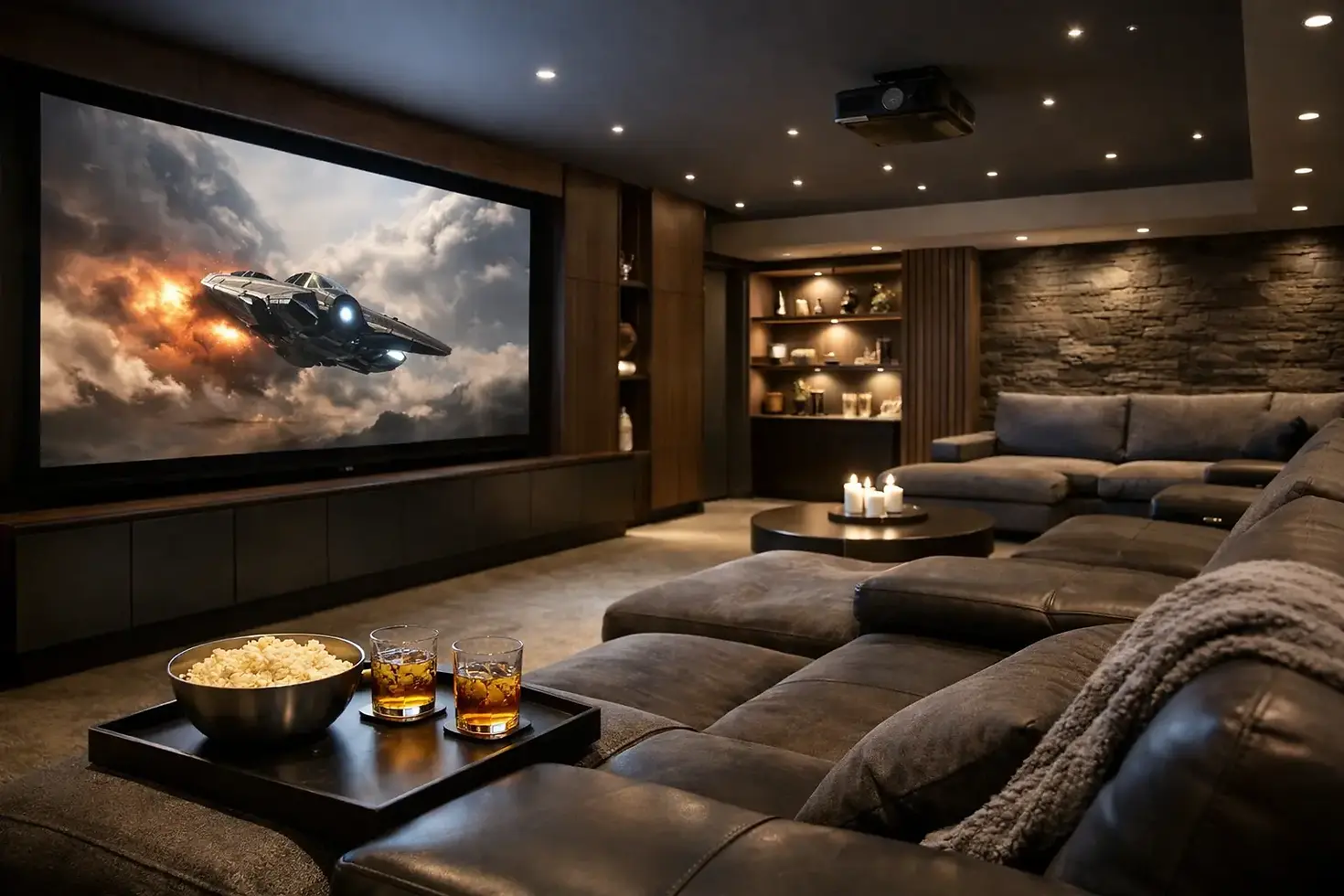
A well-planned cinema room is rarely defined by the screen alone. The most successful home cinema design ideas begin with how the room feels when the lights go down - how the seating supports the body, how sound behaves across the space, and how every surface contributes to a calm, considered atmosphere rather than visual noise.
For discerning homeowners, that usually means moving beyond off-the-shelf recliners and improvised media rooms. A private cinema should deliver comfort, acoustic control and architectural cohesion in equal measure. The room needs to perform technically, but it also needs to belong to the home.
Home cinema design ideas that improve the whole room
The strongest cinema interiors are built as complete environments. Seating, wall treatments, lighting and proportions must work together. If one element is handled as an afterthought, the room often looks expensive yet feels unresolved.
1. Start with the seating, not the accessories
In many projects, seating is treated as the final purchase. In practice, it should shape the room from the outset. Seat width, recline depth, arm scale and row spacing all influence circulation, sightlines and the overall sense of proportion.
This is particularly true in premium schemes where comfort expectations are high. A handcrafted cinema chair with generous cushioning and integrated features requires space around it to feel composed. Compress the layout too tightly and even excellent seating loses its impact. Give it proper breathing room and the room immediately feels more architectural.
There is also a visual consideration. Seating sets the design language for the entire cinema. Tailoring, stitching, leather or fabric selection, and plinth or leg detail will inform the finish direction of walls, flooring and lighting. This is where bespoke furniture has a clear advantage over mass-market alternatives.
2. Treat acoustics as a design feature
One of the most valuable home cinema design ideas is also one of the most overlooked - make acoustic treatment part of the visual scheme. Bare walls, reflective ceilings and hard flooring may suit other rooms in the house, but they are rarely ideal in a cinema environment.
Acoustic panels, fabric wall systems and sound-absorbing layers can be integrated with precision so the room looks refined rather than technical. Done well, these treatments soften reflections, improve dialogue clarity and create a more immersive listening experience without dominating the aesthetic.
The right balance depends on the room. A smaller cinema may need more control to avoid harshness and bass build-up, while a larger room can handle a little more liveliness. The answer is seldom to over-treat every surface. Good acoustic design is measured, not heavy-handed.
3. Use lighting in layers
Cinema lighting should do more than dim. It needs to support arrival, seating, intermission and cleaning without flattening the room. Layered lighting is usually the answer.
Low-level aisle or plinth lighting adds safety and atmosphere. Wall-integrated lighting can draw out texture in fabric or acoustic panels. Ceiling lighting should be discreet and controllable, not visually dominant. The most successful rooms avoid a single bright source in favour of a composed lighting scheme with multiple scenes.
Warm colour temperature matters here. Cooler light can make a cinema feel clinical, especially against darker materials. A warmer glow is generally more flattering to rich fabrics, timber details and deep-toned leathers.
4. Choose darker tones, but not only dark tones
A cinema room benefits from visual restraint. Deep charcoals, warm taupes, tobacco browns, dark navy and blackened timber all help reduce distraction and support screen performance. Yet an entirely dark room can feel flat if there is no material variation.
The stronger approach is to work within a restrained palette and introduce depth through texture. Matte finishes, stitched upholstery, ribbed wall panels, brushed metal details and soft woven fabrics create richness without stealing attention from the screen. This is where luxury is felt rather than announced.
If the room adjoins a more open-plan living area, the palette may need to bridge both worlds. In that case, a slightly lighter interpretation can work, provided the screen wall and key reflection points remain controlled.
Space planning matters more than size
A large room offers flexibility, but a smaller room can still become an exceptional cinema if proportions are respected. The essential question is not simply how many seats can fit. It is how many seats can fit well.
5. Design around sightlines and comfort
Every seat should have a clear, comfortable view of the screen without awkward neck angles or blocked perspectives. Screen height, viewing distance and riser design all play a part. If a second row is planned, the rear platform should be calculated properly rather than added for effect.
There is often a temptation to maximise capacity. For private clients, that is not always the best decision. Six well-positioned seats can deliver a better experience than eight compromised ones. Luxury in a cinema room is often expressed through ease - easier movement, easier viewing, easier relaxation.
6. Give dedicated space to speakers and concealment
Technology deserves thoughtful integration. Speakers, subwoofers, cabling and equipment storage should be considered early so they do not disrupt the finished room. Visible compromises tend to undermine otherwise excellent interiors.
This does not mean every component must disappear completely. In some schemes, speaker placement can be celebrated with elegant symmetry and flush detailing. In others, concealment behind acoustically transparent fabrics is the cleaner choice. It depends on the design intent, the equipment specification and the level of visual minimalism the client wants.
A dedicated equipment area is also worth considering, especially in larger homes. Removing heat and fan noise from the cinema itself helps preserve the quiet, enveloping quality the room should deliver.
Home cinema design ideas for a more bespoke result
A private cinema should feel specific to its owner and its architecture. Generic room packages often miss that point. Bespoke decisions create the difference between a room that works and one that feels truly resolved.
7. Add materials that belong to the house
The best cinema rooms do not feel imported from another property. They borrow cues from the wider interior language - timber species, metal finishes, joinery profiles, fabric tones or stone details - and reinterpret them in a cinema-appropriate way.
That continuity is especially important in high-value homes where every room has been carefully curated. A screening room can be darker, softer and more atmospheric than the rest of the house while still feeling connected to it. This is often the mark of mature design.
8. Build in practical luxury
Cupholders and recline mechanisms are useful, but practical luxury goes further. Consider concealed storage, integrated charging, easy-clean performance fabrics in family spaces, and durable finishes that retain their character over time.
This is where craftsmanship becomes visible in daily use. Precision upholstery, dependable mechanism quality and well-judged cushioning matter long after installation day. Premium clients notice how a chair ages, how stitching holds, and whether comfort remains consistent after years of regular viewing.
9. Use wall design to create rhythm
Large, uninterrupted wall surfaces can make a cinema feel unfinished, even when the furniture is excellent. Panelled wall systems, upholstered sections and acoustic compositions help create rhythm and scale.
They also offer an opportunity to control the mood of the room. Vertical patterning can add height, while wider panel formats often feel calmer and more contemporary. The right proportion depends on ceiling height, room width and the presence of architectural features such as columns or bulkheads.
This is one area where custom design pays dividends. Standard panel sizes rarely align perfectly with a room’s geometry, whereas a bespoke approach creates visual order.
10. Plan for longevity, not novelty
Some cinema rooms are designed around trends that date quickly - overly themed décor, aggressive LED effects or furniture chosen for gadgets rather than comfort. A more durable approach favours timeless forms, high-quality materials and restrained detailing.
That does not mean the room should feel conservative. It means the design should still look convincing in ten years. In premium interiors, longevity is part of value.
For many clients, the most successful route is a room that feels quietly impressive on first viewing and increasingly satisfying over time. That is the difference between novelty and permanence. It is also the thinking behind brands such as RaSiKe, where handcrafted seating and integrated room design are developed to deliver both visual refinement and long-term performance.
A cinema room should reward every use, whether it is a Friday night film, a private screening or a family gathering that runs later than planned. The right design choices make that feel effortless, and that is usually the clearest sign the room has been designed properly.
Comments